
Torrija Through Time: Yesterday and Today of Spain’s Oldest Sweet

March arrives, and with it comes Lent. In Seville, it’s impossible not to breathe in the scent of orange blossom dotting the city’s orange trees with white polka dots, or the cinnamon and honey wafting from the pastry shops, where one of the most deeply rooted sweets in Sevillian cuisine is beginning to appear once more: the torrija.
Though not the only one, the torrija is the quintessential Holy Week dessert. Every spring, we eagerly await the return of that soft, sponge-like bread soaked in honey and infused with the warm aroma of cinnamon as it reappears in shop windows.
But have you ever wondered why such a simple recipe, made with such everyday ingredients, is only eaten during such a specific time of year? Did you know that its origin has nothing to do with Easter?
Which came first—Holy Week, or the torrija?
The answer is clear: the torrija.
Ancient Roots in a Sweet Tradition
There is evidence of similar recipes in the famous Roman cookbook De Re Coquinaria, attributed to Marcus Gavius Apicius and written in the 4th or 5th century. In the section dedicated to sweets, a recipe is described in which bread is soaked in milk, then fried and coated with honey.
Since that time, numerous variations of this preparation have appeared, with results remarkably close to the modern torrija. Back then, it held no religious significance—but it was already considered a very special dessert, tied to one particular moment: childbirth.
Torrijas were traditionally given to women who had just given birth for two main reasons: it was believed that, thanks to their high milk content, they would help stimulate breastfeeding. At the same time, the key ingredients—milk, bread, egg, honey—were considered powerful sources of energy, commonly given to the sick and to women in postpartum recovery to help them regain strength.
From Postpartum Recovery to Lenten Sweet
So how did the torrija become associated with Lent?
That connection is relatively recent. By the mid-19th century, the ingredients used to make torrijas had become widely accessible. Before then, not everyone could afford white bread or milk, so this dessert was reserved for special occasions—like, for instance, childbirth.
Once the ingredients became part of everyday life, torrijas lost their status as a luxurious treat and came to be seen as humble, ordinary fare.
Their association with Lent happened more or less by coincidence: all of the ingredients used in torrijas were permitted during the Lenten fast. And thanks to their modest, unpretentious nature, they were seen as a way to add a touch of sweetness to the season—without being overly indulgent or sinful.
Just as sinful are all those reinvented torrijas now featured on dessert menus at gastrobars all over the city. These torrijas are anything but humble or simple—they’ve been transformed to perfectly fit the food porn trend: dripping with melting ice cream, made with rich, carefully crafted breads, and topped with endless syrups and extravagant toppings.
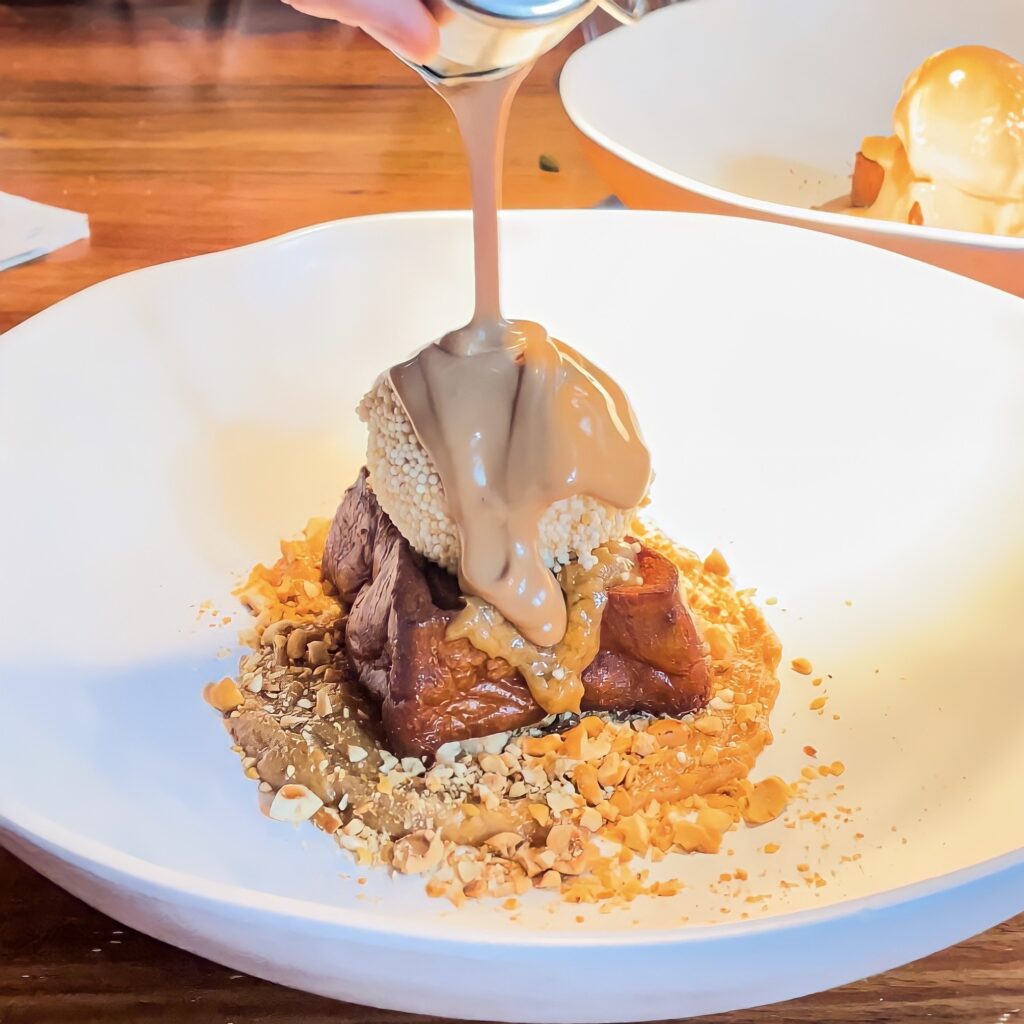
Is this new reinterpretation of the torrija a stroke of genius or a small sacrilege born from the gluttony of young chefs? I’ll leave the answer to that question in your hands, but the truth is that the trend of indulgent torrijas isn’t exactly new.
When bread and honey began to be seen as too basic to create a special dessert, mid-19th-century cooks invented luxurious torrijas with chocolate, almond and egg yolk, coconut, cheese, jam, and more to feature on their restaurant menus and set them apart from the austere classic torrijas. As they say, everything has already been invented.
We prepare the classic recipe in our Traditional Cooking Workshop. And you—are you more of a classic honey torrija fan, or do you prefer the rich brioche and ice cream-topped ones?